Linen 101 · Bedding guide
Choosing Breathable Sheets: A Naturepedic Fiber and Fit Guide
The comfort of a sheet is not decided by its fiber label alone. Weave, weight, finish, mattress depth and care all shape how bedding feels night after night. Here is how to compare those details—and make a more informed choice about breathable sheets.
Published November 22, 2026
A bed is a small climate system. The mattress stores warmth; the duvet adds insulation; the sleeper releases heat and moisture; and the sheet sits between body and bedding, responding to each. That is why a fiber name, on its own, cannot promise a particular night’s comfort. The experience emerges from several connected decisions: what the yarn is made of, how it is woven, how substantial the fabric feels, how it was finished, and whether it fits the mattress correctly.
For readers comparing Naturepedic sheets, these details are practical rather than abstract. They help translate a product description into questions that matter at home: Will the sheet feel airy or weighty? Does the fitted corner have enough depth? What pieces come in the set? Can the fabric be washed in the household’s regular routine? A thoughtful comparison begins with those questions, not with a single number or an assumption that “natural” means identical across fabrics.
Breathability is a combination, not a label
Breathable bedding allows air and water vapor to move through or away from the fabric with reasonable ease. The exact sensation depends on the fiber, yarn, weave, thickness and finish working together. Two sheets made from the same fiber may feel quite different if one is tightly woven and smooth while the other has a more open structure and a textured surface.
A useful distinction is that airflow and moisture management are related but not interchangeable. A fabric may feel cool when first touched, yet retain warmth during a long night. Another may feel substantial in the hand but still be comfortable because its structure supports air circulation and helps moisture disperse. Room temperature, humidity, duvet weight, mattress materials and individual sleep preferences all influence the result. No sheet can regulate every bedroom in the same way.
Linen is made from flax and is valued for its distinctive texture and relaxed drape. The Naturepedic organic linen sheet description identifies the fabric as GOTS-certified organic flax linen, with a listed weight of 185 grams per square meter. It also describes the sheets as breathable and moisture-wicking, and notes that linen’s feel can soften with washing. Those specifics provide more useful context than the word “linen” by itself: fiber, weight, certification and care all help describe what a household is considering.
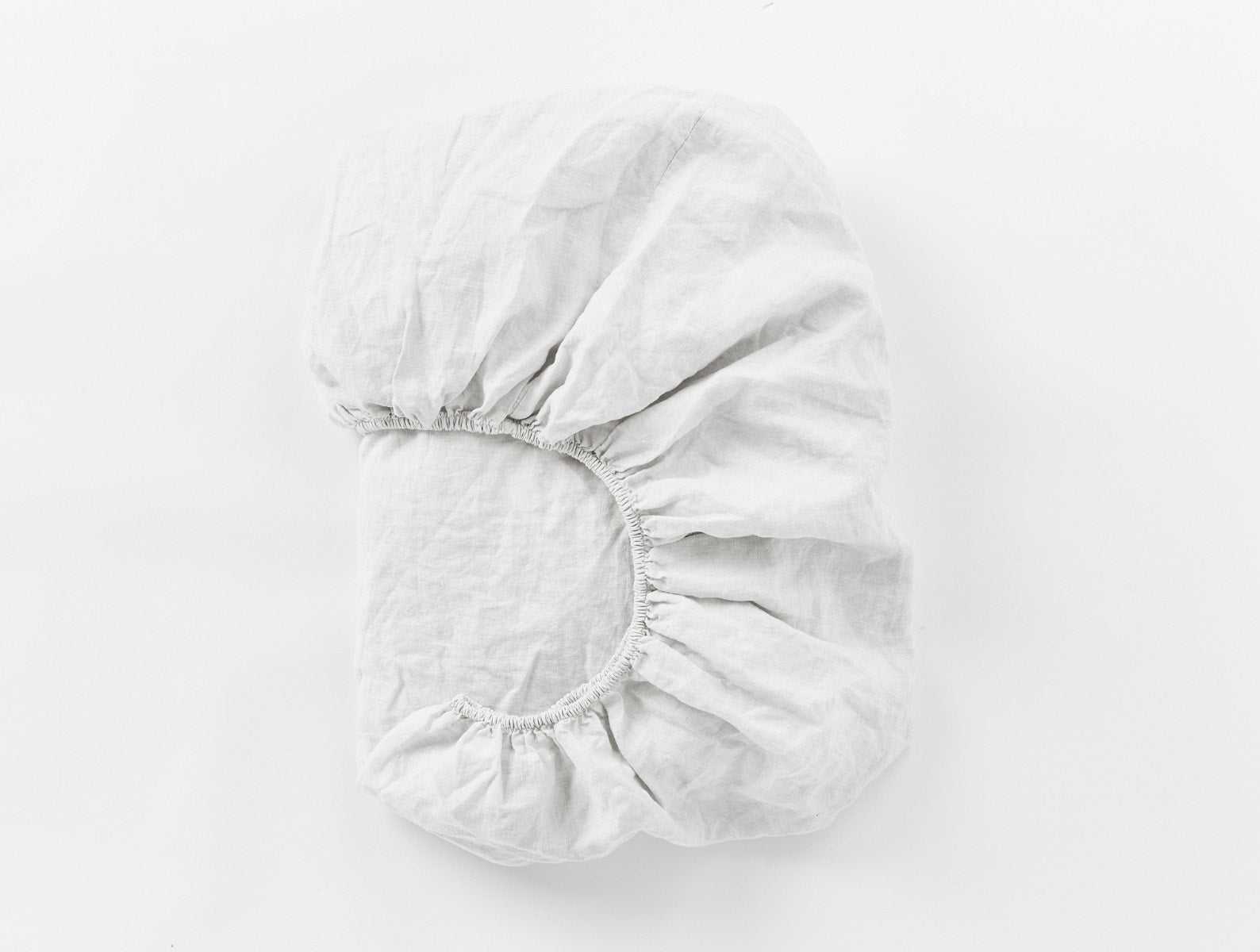
The product information lists Queen, King and California King sizes, a set containing a flat sheet, fitted sheet and two pillowcases, and a 15-inch pocket on the fitted sheet. The listed care instructions are machine wash warm, tumble dry low, warm iron and no bleach. Because sizes, colors and product details can change, readers should confirm current specifications before ordering.
For a closer look at those listed specifications, see the Naturepedic Organic Linen Sheets. Treat the description as a starting point for comparison: the best choice is the one whose feel, fit and upkeep align with the bed and the people using it.
Fiber matters—but not in isolation
Natural fibers are often chosen for their tactile qualities and familiar origins, but “natural” is not a complete performance specification. Flax linen, cotton and other fibers differ in structure, feel and the way they are spun and woven. Even within one fiber family, the length and quality of the staple, yarn construction and finishing can change the final textile.
Linen’s characteristic surface may include subtle irregularities known as slubs, which arise from variation in the yarn. For many people, that texture is part of its appeal; it gives the fabric a less uniform, more relaxed appearance. Others may prefer a smoother hand. Neither preference is a measure of quality by itself. The important question is whether the fabric’s texture feels comfortable in direct contact with the skin and suits the intended use.
Organic certification is another detail worth reading carefully. A certification such as GOTS relates to defined requirements for organic textiles and processing; it is not a substitute for checking the actual fiber content, construction or care label. If environmental or sourcing standards matter to a purchase, review the specific certification stated for the item and understand what it covers. Avoid assuming that a broad phrase such as “eco-friendly” answers every question about a product’s supply chain.
Fiber can also be blended with other materials. A blend may change softness, drape, durability or laundering needs. That is why the fiber composition should be read alongside product construction rather than inferred from a product name or color description. A sheet set described as linen should still be checked for percentages and any additional fibers.
Weave and weight shape the hand
Weave describes how yarns cross to form cloth. It affects texture, density, drape and the way a fabric behaves. A more open construction can feel different from a compact, closely set weave, even when the fibers are similar. Product descriptions do not always explain weave in technical detail, so fabric weight, finish and in-person feel—when available—can help fill in the picture.
Fabric weight is commonly given in grams per square meter, or GSM. It indicates the mass of a square meter of fabric; it does not, by itself, tell you whether a sheet will feel cool, soft, strong or suitable for a particular season. Fiber type and weave also matter. The Naturepedic listing’s 185 GSM figure offers a point of comparison, but it should not be treated as a universal benchmark for comfort or quality.
Finishing can alter the surface and initial hand of a textile. Washing or other finishing processes may leave linen feeling more relaxed at first use, while repeated laundering can further change its texture. This helps explain why a sheet may feel different straight from its packaging than it does after several washes. If a product description mentions a finish, consider how it fits your preference for crispness, softness or visible texture.
Thread count, often used to compare cotton sheets, is not a universal score for all bedding. It counts threads within a given area according to a particular convention and does not fully describe fiber quality, yarn size, weave or finishing. For linen especially, a shopper may learn more from the stated fiber, fabric weight, construction, certification and care instructions than from seeking a high thread-count number.
The overlooked question: will it fit?
A sheet can have appealing fabric and still disappoint if it does not fit the mattress. Before choosing a fitted sheet, measure the mattress from its top surface to its base, including any topper or pad that will remain in place. Compare that measurement with the product’s stated pocket depth. Mattress depth can vary, and a topper can add several inches that are easy to overlook.
The Naturepedic listing specifies a 15-inch pocket for its fitted sheet. That figure is useful, but it should be compared with the actual height of the fully dressed mattress rather than treated as a guarantee of fit in every setup. A pocket that is too shallow may pull free at the corners; excess fabric may bunch if a sheet is much deeper than the mattress. Elastic construction and the shape of the corners also affect how securely a sheet stays in place.
Check the mattress size as well as its depth. Queen, King and California King are not interchangeable dimensions. If the bed includes a split or adjustable base, verify the product’s intended configuration before buying. A carefully measured mattress can prevent the common frustration of bedding that seems correct by label but shifts or strains during use.
- Measure the mattress: Include a topper or pad that will stay under the sheet.
- Confirm the size: Match the sheet to the mattress label and dimensions.
- Check pocket depth: Compare the stated depth with the complete mattress height.
- Review what is included: A set may contain a flat sheet, fitted sheet and pillowcases, but counts and sizes can vary.
Set contents deserve a close read
“Sheet set” can sound comprehensive, but the contents are not always identical across brands or sizes. The Naturepedic product information describes a set with one flat sheet, one fitted sheet and two pillowcases. It also lists pillowcase dimensions by size: Standard/Queen at 20 by 32 inches and King at 20 by 40 inches. Confirm that the items and dimensions meet your needs, especially when mixing pieces from different collections.
A separate fitted sheet may be the sensible option for a household that already owns flat sheets or prefers not to use one. A full set can simplify coordination, while individual pieces allow gradual replacement. The choice is less about a correct system than about how the bed is made and laundered. If pillowcases are unusually sized, decorative shams are used, or several pillows share the bed, check each component rather than relying on the set name.
Care is part of the comfort equation
Laundry instructions influence the life and feel of bedding. Follow the care label for the specific item, since recommendations can vary by construction, dye and finish. For the Naturepedic organic linen sheet set described here, the listed directions are machine wash warm, tumble dry low, warm iron and no bleach. Use those instructions rather than assuming every linen item should be washed in the same way.
Avoid crowding the washer and dryer. Fabric needs room to move, and overloading can make cleaning less effective and increase tangling. Use an appropriate detergent amount and separate items according to color and care needs. Bleach is specifically excluded in the listed instructions for this set. If you are uncertain about a stain treatment or a change in laundering routine, check the manufacturer’s current guidance first.
Drying is another practical choice. Low heat is the listed recommendation for this product, and removing bedding promptly may help reduce heavy creasing. Linen naturally has a relaxed, rumpled character; pressing is a matter of preference, not a requirement for a comfortable bed. If a smoother appearance matters, the product listing allows a warm iron. If ease is the priority, a naturally relaxed finish may be part of the appeal.
Softness can evolve through use and washing, but care habits matter. High heat or unsuitable chemicals may be harder on fibers than the recommended routine. A little attention to instructions can help preserve the fabric’s texture and appearance without turning laundry into a specialized project.
A practical comparison checklist
When comparing breathable sheets, separate the questions into four categories: material, construction, fit and upkeep. This makes product descriptions easier to evaluate and helps prevent one attractive detail—such as an organic claim or a soft finish—from eclipsing more practical concerns.
- Material: What fibers are present, and are percentages stated? Is a certification listed, and what exactly does the description say it covers?
- Construction: Is fabric weight provided? Is the weave or finish described? Does the texture suit your preference?
- Fit: Does the fitted pocket match the mattress with its topper? Are the size and corner construction clear?
- Contents: Which sheets and pillowcases are included? Do their dimensions fit the pillows you use?
- Care: Can the sheets be washed and dried in the way your household normally manages laundry?
- Sleep environment: How do room temperature, duvet weight and personal comfort preferences affect the choice?
Choosing for real life, not an idealized bed
A breathable sheet is not a stand-alone solution to every sleep-temperature problem. The room, mattress, duvet and sleepwear all contribute. Someone who runs warm may want to consider the entire bedding arrangement, including whether a heavy comforter is appropriate for the season. Someone who prefers a more substantial feel may find that a light, crisp sheet is not automatically more comfortable simply because it seems cooler at first touch.
A useful approach is to start with what is known: the room’s typical temperature, the mattress dimensions, the current duvet, the household’s washing routine and the textures that feel pleasant. Then compare available specifications. If you are choosing linen for the first time, remember that its characteristic texture may feel different from a smooth cotton sheet, and that the hand can change with use.
The most reliable decision is usually the one supported by clear information rather than broad promises. Read the fiber content, examine the listed weight and finish, measure for fit, verify the included pieces and follow the care label. These steps will not predict every person’s exact sensation, but they make the choice more grounded and reduce avoidable surprises.
The bottom line
Choosing Naturepedic sheets—or any breathable bedding—means looking beyond the headline material. Fiber gives a useful starting point; weave, weight and finish shape how that fiber becomes cloth. Fit determines whether the sheet stays where it should. Set contents and care instructions decide whether the purchase suits everyday routines as well as the bedroom.
In the Naturepedic organic linen listing, readers can compare a stated 185 GSM fabric, GOTS certification, a 15-inch fitted-sheet pocket, specified set contents and clear laundering directions. Those are concrete details to weigh against mattress measurements and personal preferences. The goal is not to find a universal “best” sheet, but to choose bedding whose material, construction and maintenance make sense for the bed it will actually cover.